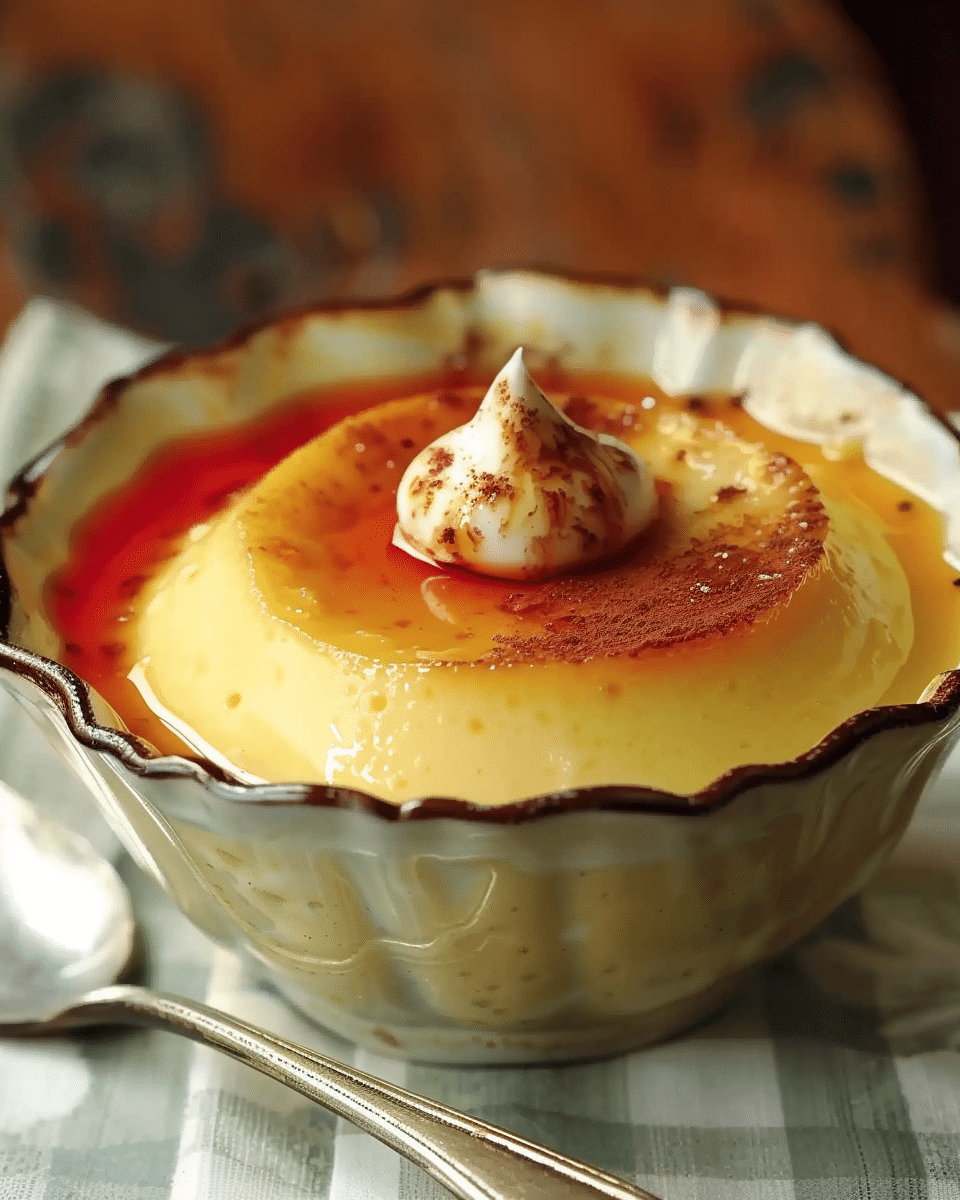
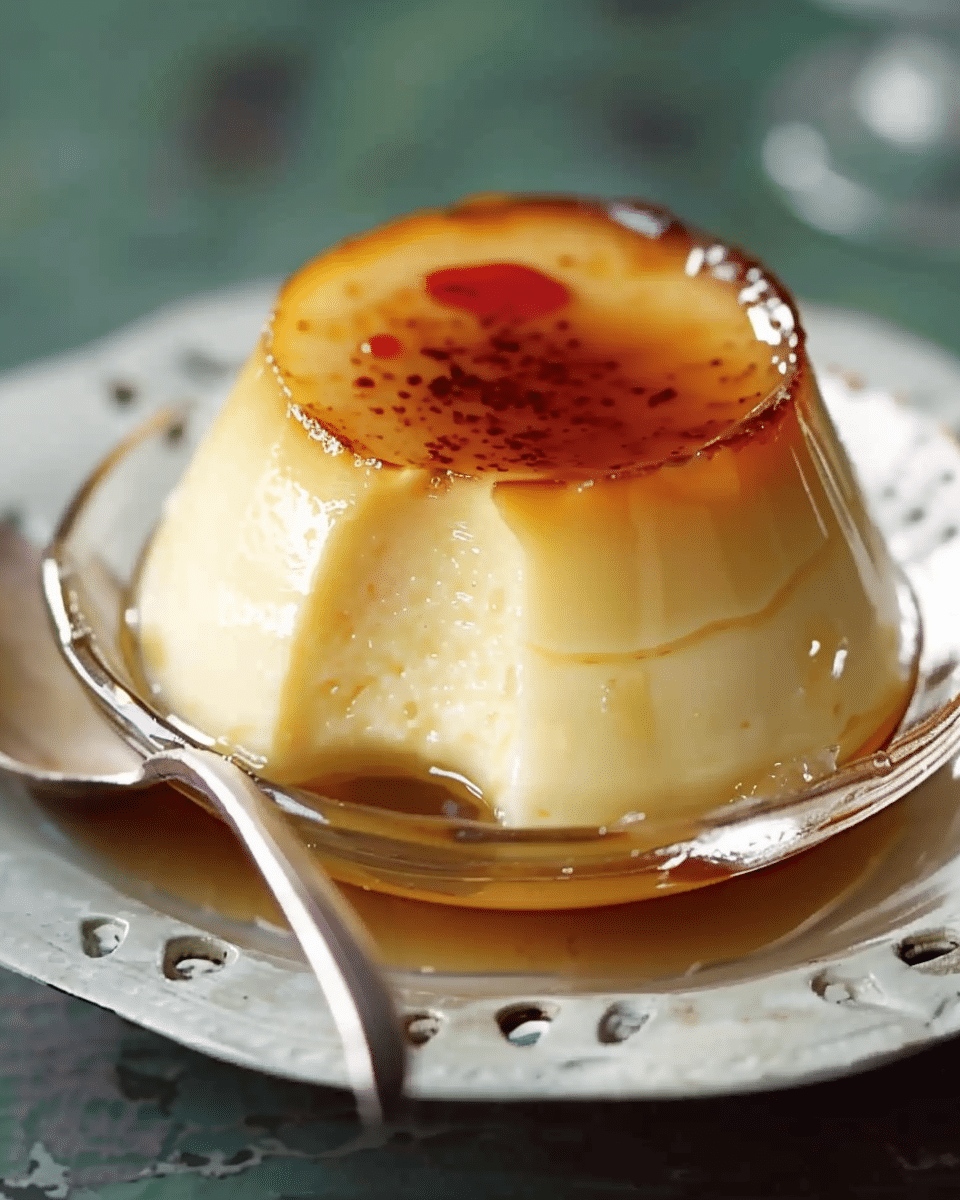
I like this recipe because it uses a few simple ingredients to create a dessert that looks and tastes impressive. The balance between the sweet custard and the rich caramel makes every bite satisfying.
Another reason I enjoy preparing this pudding is the texture. Steaming the custard gently allows it to set smoothly without becoming dense or rubbery.
I also appreciate how beautiful the finished pudding looks once it is unmolded. The glossy caramel sauce flows over the custard, creating a dessert that feels both nostalgic and elegant.
Ingredients
(Here’s a tip: Check out the full list of ingredients and measurements in the recipe card below.)
For the pudding mixture:
2 eggs 1 1/4 cups milk 30 g cane sugar
For the caramel:
30 g cane sugar 1/2 tablespoon water 1/2 tablespoon boiling water
For the topping:
4 canned cherries 1/4 cup heavy cream 1/2 tablespoon cane sugar
Other:
A little butter (unsalted) or light sesame oil for greasing the molds
Directions
I begin by lightly greasing four pudding molds with butter or a small amount of light sesame oil. This helps the pudding release easily after chilling.
To make the caramel, I place the cane sugar and about half a tablespoon of water in a small saucepan. I gently shake the pan to combine the ingredients and heat it until the sugar dissolves and begins to turn golden brown. Once the caramel reaches a light brown color, I remove the pan from the heat and carefully add half a tablespoon of boiling water around the side of the pan. I swirl the pan gently to mix the caramel until smooth. I immediately pour the caramel evenly into the pudding molds and place them in the refrigerator to harden.
Next, I prepare the pudding mixture. In a bowl, I combine the eggs and cane sugar and mix gently until the sugar dissolves. I try not to whisk too vigorously to avoid creating too many air bubbles.
In a separate small pot, I heat the milk until it begins to warm and small bubbles appear along the edges of the pan. I make sure not to let the milk boil. I slowly pour the warm milk into the egg mixture while stirring gently. After mixing, I strain the mixture through a sieve to create a smooth custard.
I then divide the custard mixture evenly into the chilled molds over the hardened caramel. If I see bubbles on the surface, I lightly touch them with paper towels to remove them.
To cook the pudding, I bring about 2 centimeters of water to a boil in a heavy pot and then turn off the heat. I place the pudding molds in the pot and cover the lid with a dish towel before closing it. This prevents water droplets from dripping into the custard.
I cook the pudding over very low heat for about five minutes, then turn off the heat and let it sit for about thirty minutes so it finishes cooking with residual heat. The pudding is ready when the surface feels firm and a skewer inserted in the center comes out clean.
Once cooked, I refrigerate the puddings until completely chilled.
Before serving, I whip the heavy cream with the cane sugar until lightly fluffy. I top each pudding with whipped cream and place a cherry on top for garnish.
I sometimes change the flavors slightly depending on the dessert style I want.
For a vanilla custard version, I add a small amount of vanilla extract to the custard mixture before steaming.
If I want a richer flavor, I replace a small portion of the milk with cream.
For a fruit variation, I add fresh berries or sliced fruit on top along with the whipped cream.
For a deeper caramel flavor, I cook the sugar slightly longer until it becomes a darker amber color, which creates a stronger caramel taste.
Storage/Reheating
I keep custard puddings covered in the refrigerator for up to three days. Chilling helps the custard maintain its smooth texture.
Before serving, I usually run a thin knife around the edges of the mold and gently invert the pudding onto a plate so the caramel sauce flows over the top.
Since custard pudding is meant to be served chilled, I do not reheat it.
FAQs
Why Is My Custard Not Smooth?
I find that custard becomes smoother when I mix the ingredients gently and strain the mixture before cooking.
Can I Bake The Custard Instead Of Steaming It?
Yes, I sometimes bake it in a water bath in the oven at a low temperature to achieve a similar texture.
Why Do I Cover The Lid With A Towel?
I wrap the lid with a towel so condensation does not drip into the pudding, which helps keep the surface smooth.
How Do I Know When The Pudding Is Done?
I gently touch the surface or insert a skewer. If the custard feels firm and no liquid comes out, it is ready.
Can I Make Custard Pudding Ahead Of Time?
Yes, I often prepare it a day ahead and store it in the refrigerator until I am ready to serve.
Conclusion
I enjoy making custard pudding because it transforms simple ingredients into a delicate and elegant dessert. The smooth custard paired with bittersweet caramel creates a balanced flavor that feels both comforting and refined.
Whenever I prepare this pudding, I appreciate how relaxing the process is and how satisfying it feels to serve a classic dessert that always impresses.
The best custard pudding featuring silky egg custard topped with bittersweet caramel and whipped cream. A simple yet elegant dessert perfect for dinner parties or special treats.
Author:Emma
Prep Time:20 minutes
Cook Time:15 minutes
Total Time:1 hour 35 minutes
Yield:4 puddings
Category:Dessert
Method:Steaming
Cuisine:Japanese
Diet:Vegetarian
Ingredients
For the Pudding Mixture
2 eggs
1¼ cups milk
30 g cane sugar
For the Caramel
30 g cane sugar
½ tablespoon water
½ tablespoon boiling water
For the Topping
4 canned cherries
¼ cup heavy cream
½ tablespoon cane sugar
For Greasing
A little butter (unsalted) or light sesame oil
Instructions
Step 1: Prepare the Molds
Lightly grease 4 pudding molds (about 7 cm diameter) with butter or light sesame oil.
Set aside.
Step 2: Make the Caramel
In a small saucepan, combine 30 g cane sugar and ½ tablespoon water.
Heat over medium heat while gently shaking the pan until the sugar dissolves and turns golden brown.
Turn off the heat and carefully add ½ tablespoon boiling water around the sides of the pan.
Gently swirl the pan to combine.
Immediately divide the caramel evenly among the pudding molds.
Place molds in the refrigerator until the caramel hardens.
Step 3: Prepare the Custard Mixture
In a bowl, combine eggs and cane sugar.
Mix gently with a whisk until the sugar dissolves (avoid creating too many bubbles).
In a small saucepan, warm the milk until small bubbles appear around the edges. Do not boil.
Slowly pour the warm milk into the egg mixture while stirring gently.
Strain the mixture through a fine sieve to remove bubbles and create a smooth custard.
Step 4: Fill the Molds
Pour the custard mixture evenly into the molds over the hardened caramel.
If bubbles appear on the surface, gently remove them with a paper towel.
Step 5: Steam the Pudding
Bring about 2 cm of water to a boil in a heavy-bottomed pot.
Turn off the heat and place the pudding molds inside the pot.
Cover with a lid wrapped in a kitchen towel to prevent water droplets from falling into the pudding.
Cook over very low heat for about 5 minutes, then turn off the heat.
Leave the puddings in the pot for 30 minutes, allowing them to finish cooking with residual heat.
Step 6: Chill
Check doneness by inserting a skewer in the center. If no liquid comes out, it is ready.
Remove from the pot and chill in the refrigerator until cold.
Step 7: Prepare the Topping
Whip heavy cream and cane sugar until soft peaks form.
Top each pudding with whipped cream and a cherry before serving.
Notes
Avoid Dark Caramel: If caramel becomes too dark, it will taste bitter. Aim for a golden brown color.
Warm Milk Only: Boiling milk can cook the eggs and ruin the custard texture.
Smooth Texture Tip: Straining the custard mixture helps create a silky pudding.
Prevent Water Drops: Wrap the lid with a towel to stop condensation from dripping into the pudding.